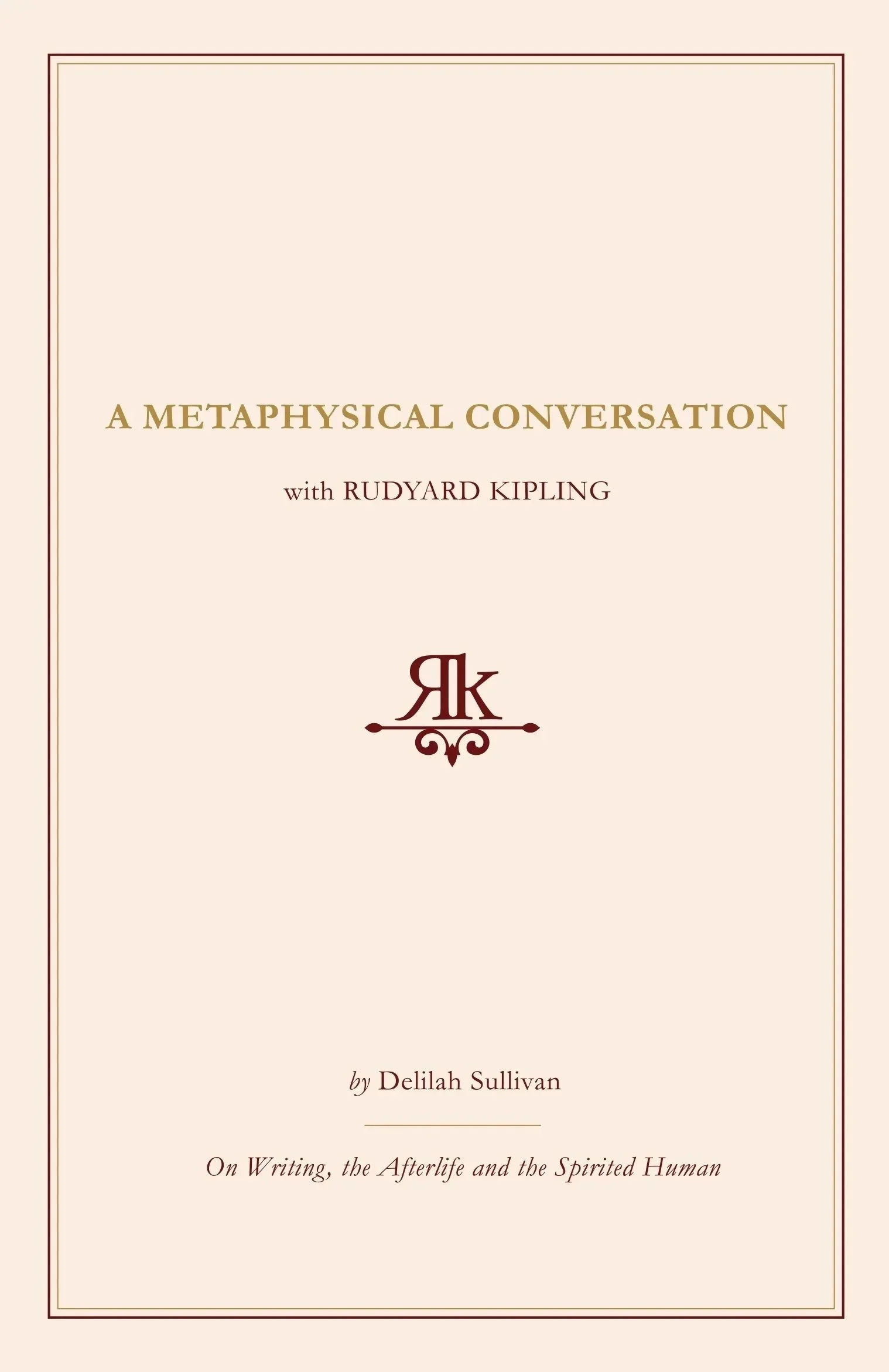
A Metaphysical Conversation with Rudyard Kipling: On Writing, the Afterlife and the Spirited Human
‘Enlightening and uplifting’
‘Insightful and beautifully thought provoking’
‘A tonic for the mind, body and soul’
Buy at Amazon.co.uk
Buy at Amazon.com
Published 2024
Available at Amazon worldwide
Print and ebook
A Metaphysical Conversation with Rudyard Kipling: On Writing, the Afterlife and the Spirited Human is a beautiful and unique conversation between two souls, past and present, about the human condition.
As increasing numbers of us awaken spiritually and energetically, we enter expanded levels of consciousness. Intelligent and encouraging, this gently humorous book of wisdom from the afterlife helps us understand and access this soul energy. We are taken on a journey, lightly and with care, through conversations that address the qualities, challenges – and beauty – of our human life and creative spirit.
Delilah Sullivan, who through the process of channelling acts as a conduit for the metaphysical energy, captures the intimacy and truth-telling from the late-Victorian poet and story-teller in a compellingly simple, yet touchingly profound way. From the afterlife, Rudyard Kipling (1865–1936) reflects upon his regrets and ‘burden of heart’, his love of writing, and much more. Mostly, he encourages us to live this life as fully and softly as we can.
Through Delilah’s graceful hand, this extraordinary insight shows us how we can awaken, why it is necessary and why the time is now.
Review by The Scientific & Medical Network, Paradigm Explorer #146 2024-3
“Delilah describes herself as a ‘channeler of words and energy.’ Her work between the physical and non-physical worlds began in 2013 following a profound energetic and spiritual transformation. She invites us to connect with the wisdom of our soul, to live a full and awakened life, an aspiration very much reflected in this new book about writing, the afterlife and the spiritual human. Her earlier book reviewed in these pages (Paradigm Explorer 2018-1) was a connection with Plato, and the context of this one is very different as a conversation with the well-known writer, Rudyard Kipling (1865-1936) - many readers will have been brought up on his Jungle Book. The style is intimately conversational, covering a multitude of topics, but especially beauty and artistic inspiration expressed in writing; also softness and kindness as values and practices. RK comes across as a strong, clear and practical intelligence dancing at the interface between non-physical and physical. The messages are a reminder of the importance of soul and heart connection; RK writes that ‘sustained connection to one’s soul answers all questions of heart and instinct’, and this is a means of knowing oneself more deeply by opening doors into the invisible, aligning and knowing oneself as love. These inspiring conversations are best absorbed as regular contemplative reading. The only thing I found slightly jarring is the consistent use of the term ‘dearie’ by RK when communicating with Delilah, but this is a small quibble.”
David Lorimer - The Scientific & Medical Network

Channelling a message from RK at the book launch … it makes signing books quite magical!
‘You see, dearie, all the world is just detail. Detail which can change. But the connection to one’s personal spirit, however we describe it, this never changes. It is the constant which takes one from birth to death and beyond. From before birth, as many increasingly feel. One’s connection to one’s spirit is a guiding force, to harbour safety in times of distress and ever-more joy in times of exuberance. But this sense of self-discovery, of knowing, in the deepest reaches — of a truth bigger than oneself, which guides and harbours oneself — this comes from an understanding of the oneness and unity, does it not? If we can share enthusiastically and honestly of our connection, perhaps just one or two will also find solace and joy. It is the beauty, after all, which brought our connection together, did it not?’
From A Metaphysical Conversation with Rudyard Kipling, page 221.