Custodianship of ‘Plot 1 Field-Side’
Custodianship of Plot 1 Field-Side. For the past 6 months I have been custodian of an allotment — a strip of land of approx 11m by 7m, overlooking fields and countryside. I have loved it — even with the intense watering this summer’s drought has required …
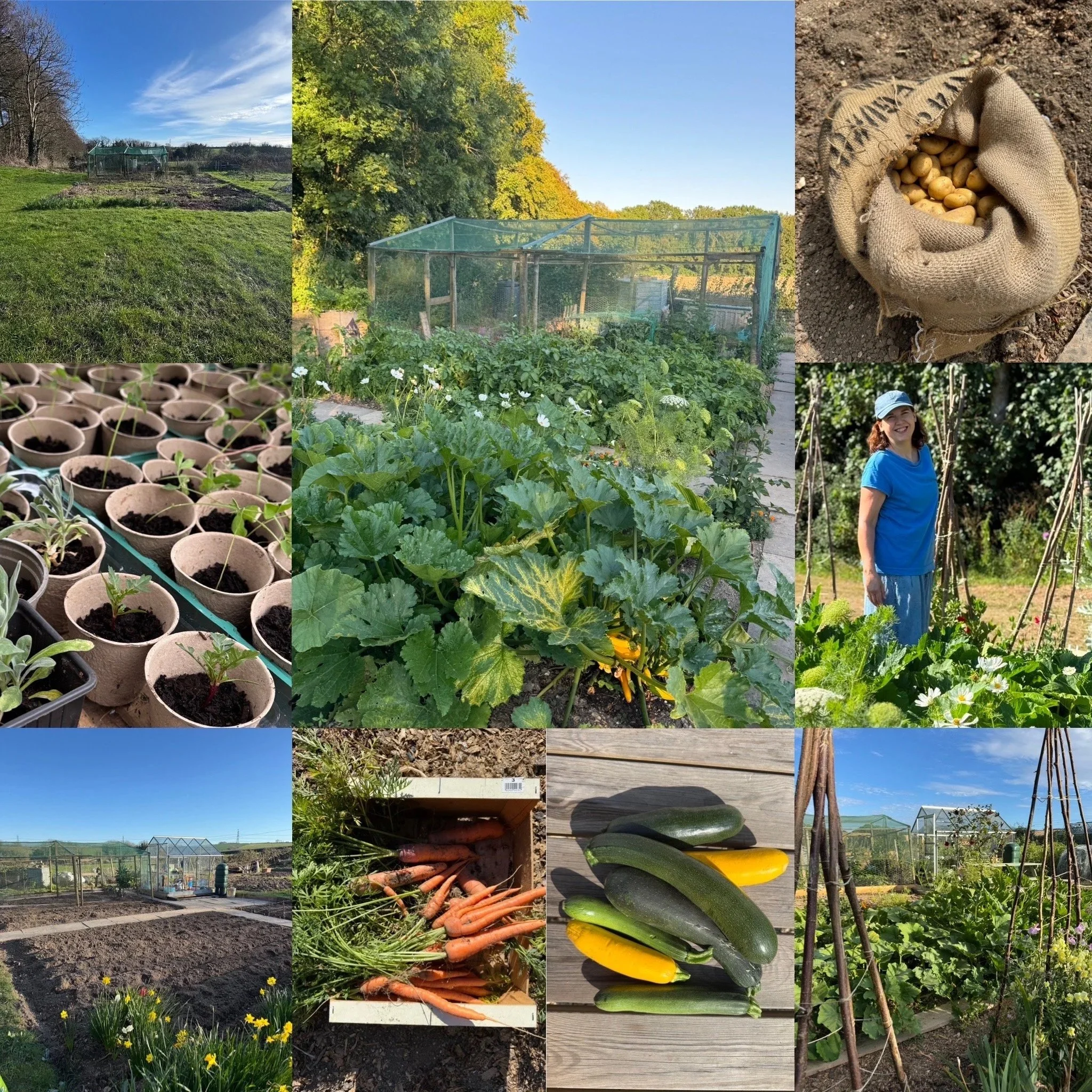
For the past 6 months I have been custodian of an allotment — a strip of land of approx 11m by 7m, overlooking fields and countryside. I have loved it — even with the intense watering this summer’s drought has required. My name had been on the wait-list since 2024 — but when I reached the top of the list in February, I paused. Would I be able to manage it, given my writing and work? Probably not, but I wanted the experience.
So, I jumped in — and this is what I found:
The act of custodianship comes with its own set of rules. Energetic and emotional ones, as the tending of a piece of land and its potential is passed from one pair of hands to the next. It is so much more — and carries so much more life and heart energy — than the paper contract says. There is history — dreams, creativity, nourishment and solace — in every clump of mud dug. In the seasons layered into its neat plotted landscape.
An allotment is company. The land itself, and also the plants, seeds, crops growing. A harvest becoming, communicating its needs. A reciprocal rapport between the provider of water, shade, fertile conditions … in return for the provision of food, sustenance, health. And a confidence, in the self-sufficiency.
No food I have eaten (including from the best of chefs and cuisines) has ever tasted as good, or as creative, as a plateful of ingredients grown by myself. The cyclical energy of eating our own food source … brought into thought, planted and tended to by our own creativity and care — imbued with the vibrancy of Light and Nature — is a thing. It’s an energy I had not experienced before — which the mind ‘knows’ is beneficial but I experienced as ‘a thing’. This is what living is about. It is a different level of vibrancy and vitality — of connection. One where everyone benefits (for there are always more courgettes than one or two people can eat :))
An allotment is community. Sometimes I would be the only one there, but I never felt alone. Opening the metal entrance gate, felt like I was entering a portal. And the presence of other plot-holders only added to the presence of the place. No ‘fast-moves’ or loud noises. Just a gentle pace and sacred tending where mental thoughts lifted, feet grounded and hearts opened. Tips shared, seedlings shared, produce shared. Occasional drinks and conversation in the setting sun. Joy shared along with watering support — I would have barely a produce were it not for my lovely neighbour stepping in to water for days at a time. This is the reciprocity needed, to live in community. To feed ourselves.
And perhaps the greatest learning — of a hard-hitting truth. That although we ‘know’ we need water to live, it was not until I had to daily (sometimes twice a day) carry 20 watering cans back and forth from the water station to my vegetables, that it really sunk in how vital our water is. That without it, nothing would have lived on my allotment — no food for our families. One plot = our country. One country = our world.
Another element, almost as precious as water and sunshine, is the time needed for an allotment to thrive. Time to care for each stage of the planting and growing process, time to be excited and exploratory, time to ponder and pause, to dig and use every bodily muscle, to laugh at what didn’t grow. We gave the hours, hundreds of them, over the past 6 months. But to feed ourselves — as a nation — would require a redressing of how we live and allocate the hours in our day. A re-prioritising of what is most essential and precious. It is a collective discussion we would do well to start now.
And then it became time to hand it on — to a new custodian. Because as much as I have loved every moment of it, my path is taking me on. I will find ways of incorporating what I have experienced — the light and joy and beneficial health of it, as well as the lessons and new friendships. When I need a fix, I’ll pop back and offer my help if wanted. And I look forward to one day growing my own food again. In the meantime, plot 1 field-side is in a new pair of hands — growing the food we need.
Love,
Delilah
Custodianship: February to August 2026
Special thank you to Mark for embarking on the allotment journey with me, and for building me a greenhouse (and much more!) — it became a moment of beauty.
And, as with all land, I worked with the spirit of place, and asked its permission — and when designing the layout, I dowsed for what the plot wanted to grow and where to place it.
Produce grown: Potatoes (a lovely crop of Charlottes, some Foremost and Maris Piper), a glut of tomatoes, peppers, red and white onions, chilli, garlic, spinach, rocket, sorrel, lettuces, spring onions, a handful of blueberries, strawberries, raspberries and an abundance of courgettes. Carrots, a handful of beans, mint, sage, dill, rhubarb, cucumber, sweetpeas, sunflowers, cosmos, dahlias, marigolds … and still in the ground: squash, zuca, pumpkin, celery, parsnip, beetroot, aubergines, radicchio, leeks. It’s amazing how much we can grow on a modest patch of land.
The LEVADAS of Madeira
The LEVADAS of Madeira. There is something about walking which opens the heart. A settling, into our bones and being. And rhythm to breathe … especially when on an island in the Atlantic Ocean. Madeira — a Portuguese volcanic island, closer to the coast of Morocco than to mainland Europe — is just 35 miles long and up to 14 miles wide. Oxygen and magnetism … fresh air, everywhere. So pure and strong, it takes some adjusting to.
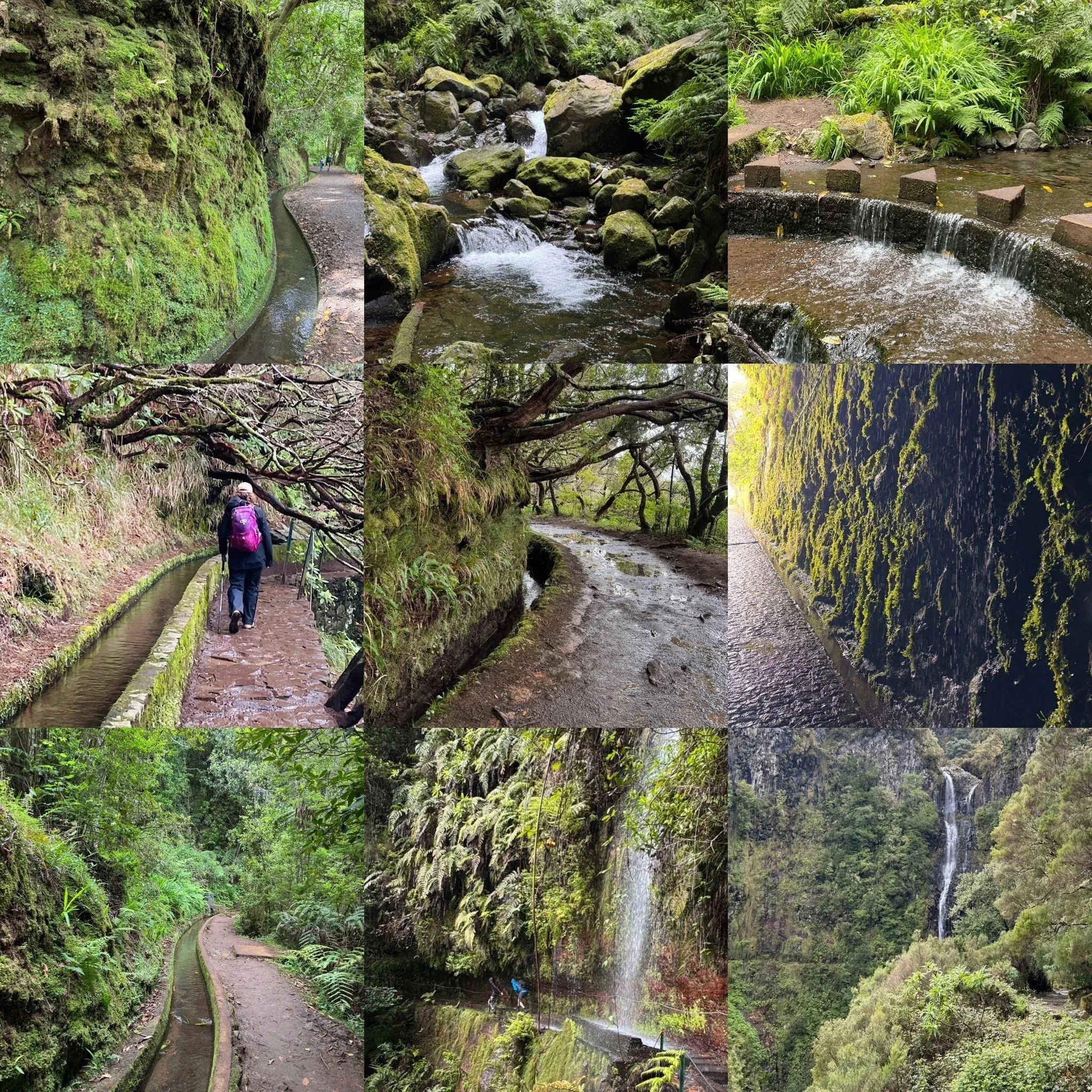
There is something about walking which opens the heart. A settling, into our bones and being. And rhythm to breathe … especially when on an island in the Atlantic Ocean. Madeira — a Portuguese volcanic island, closer to the coast of Morocco than to mainland Europe — is just 35 miles long and up to 14 miles wide. Oxygen and magnetism … fresh air, everywhere. So pure and strong, it takes some adjusting to.
I was visiting with a friend, to hike. Four full day hikes — climbs to the highest peaks and descents to the subtropical rainforest. Madeira emerged around 6 million years ago, but the Laurisilva rainforest (from continental Europe and North Africa) is 15-20 million years old and covers approximately 20% of the island, storing vast amounts of moisture and water, feeding into the Levadas, year-round. I was in my element :)
Derived from the Portuguese word levar (meaning "to carry"), the Levadas weave across the island — nearly 2000 miles of them — manmade over the centuries. And this is their beauty — not just as beautiful walkways and trails, but the ancient and present-day energy of them. A reverence for the water which feeds the island; a holiness felt, in each stone carved, laid and cared for. Channels of water — flowing because of this care — as we walked … under waterfalls, alongside moisture soaked walls of moss, ferns and lichen — through the sea breeze, holding us. Everything verdant and magnetic — charged.
The water transported by the Levadas supplies the island’s needs: human potable, agricultural irrigation and around a quarter of the island’s electricity. A supply, from the ground beneath the islander’s feet.
The Land we live upon informs the vibration of place. How we care for it and how we connect with it, affects the energetic frequency. In Madeira there is this connection woven through the whole island: from the waterfalls to the levadas; from the mountainside terraces, tilled by elders, to the drinking water available from every tap; the 80 miles of tunnels, to pathways carved at altitude, by hand, from volcanic basalt to make safer paths for visitors; banana plantations and cliff-top vineyards, local rum and exotic fruits — and all of it felt great. A recharge of my blood, pulse and the water within me. But it’s the foresight — and quiet pride — of the people of Madeira which touched me most: their reverence and care for something most of us overlook — the essential force and gift of water.
We can learn a lot from the Levadas, the people and island of Madeira.
An energetic gem — sparkling in the Atlantic.
Love,
Delilah
Visited: 09-14.05.26
We hiked with Madeira Free Spirit Walks — who were great!
PS. Madeira has around 260,000 residents, and 2-3 million tourists a year, so the walks can become very busy.
[More images on Instagram]
West Kennet Long Barrow, Avebury
Part 2 of my day in Avebury with Peter Knight and Sue Wallace-Knight …

A day with Peter Knight and Sue Wallace-Knight — part 2
After lunch at Avebury Stone Circle, we headed the couple of miles or so to West Kennet. I am partial to a long barrow, having a similarly aged one within a couple of miles of my home in Dorset. They contribute a powerful energy into the land. But I had not been inside one. West Kennet Long Barrow is 100 metres long and the only excavated one, so I was looking forward to experiencing it.
Parking at the lay-by we had a half mile or so walk to the top of the hill. Before heading up, Peter and Sue led a water blessing of the River Kennet (its source begins not far from the little bridge we had to cross). It was a moment to pause and reflect, to watch the passing movement and aliveness through a visited past. All sacred sites are, or would have been, close to water. Peter reminded us that our planet only has a set amount of shared water (also information channelled from my guide, the Spirit of Plato, in my book The Teachings of Mr P.) and that we have to look after it. Whether here in the UK or on the other side of the world, we are sharing the same water. It was a beautiful pause into the continuation of life and respect for our elements.
I loved the long barrow … it’s so, pretty. Strange word for a ‘burial chamber’, I know. The large sarsen stones form a welcoming invitation (Peter shared that the largest ‘blocking’ stone at the entrance came later and is perfectly aligned to Stonehenge, 18 miles away). After Peter requested permission from the barrow for us to enter (which is not just respectful, but creates an altogether different experience and is a practice I also use for trees and all ‘entry points’) I felt into its soft energies. It is ‘deep’ and it is also more. After all the ‘outside’ energy of the stone circles, it felt good — a relief, even — to ‘go in’.
The energies take some adjusting to. The building is circa 5000-6000 years old (constructed approx 3500 BC) with the five chambers being located only in the front section of the barrow (the rest has ‘nothing’ in it) — 2 chambers on each side as you enter and one larger one at the end. Long barrows are considered ceremonial sites of burial and birth and also places our ancestors would come to, to commune with the wisdom of their ancestors. Twenty of us squeezed in, many of us accompanied by our drums. I was immediately drawn to the first chamber on the left by a gentle wise spirit of place: Come and sit here, she said. The energies go down into the Earth by the entrance, I was told, and into ‘the void’ in the furthest chamber. I was shown that the ground beneath is crystal, compacted, and told it is a place of ‘The Sacred Wisdom of the lower levels’: a Liminal Space — not liminal as a happenstance, but a created liminal space — to call the Natural Spirit to protect and fortify the Land. And then she told me to go join the others, in the large chamber.
The Mary Line runs through Avebury Stone Circle, over Silbury Hill, and through the length of West Kennet Long Barrow, we are told. Aligned with the Equinox sunrises, the stones and construction create a channel for the energy. This is a place ‘of the wisdom of the feminine’, which we, as a group, honoured with our prayers, our seeking of guidance, our drumming and gentle singing to the symbolism — which Peter and Sue are showing us still remains today.
I leave pondering, how do we take care of our dead and honour the ancient wisdom? Here is a place where it is possible to connect — to tune in — to the, physical and liminal, space in which many others have sat; contemplating the same questions, seeking the same solutions. A human made structure is a glorious thing … I wonder how many of our ‘buildings’ will survive 5000 years — survive in spirited wisdom, as well as place. And crucially, as part of the landscape and not a blot ‘on’ it. What is the energy, or combination of energies, we must include to create this continuity? Now that’s an interesting thought :)
[Read part 1 of my day with Peter and Sue Knight]
Love,
Delilah
PS. You can read more about Peter and Sue’s work and books at www.stoneseeker.net
Visited: 13 April 2025
Avebury Henge and Stone Circles
The first time I visited Avebury was about 8 or 9 years ago. I woke up one morning and suddenly had to go. I hadn’t researched it or been thinking about it, but was almost ‘moved’ by an invisible force into the car. Off I went, to explore. I have no idea why, or what was happening — or, what I ‘missed’. It remained a bit of a mystery. This time, it was an organised affair, led by the extremely knowledgeable and friendly Peter Knight — an authority on ancient landscapes — and Sue Wallace-Knight. And it was wonderful …

A day with Peter Knight and Sue Wallace-Knight — part 1
The first time I visited Avebury was about 8 or 9 years ago. I woke up one morning and suddenly had to go. I hadn’t researched it or been thinking about it, but was almost ‘moved’ by an invisible force into the car. Off I went, to explore. I have no idea why, or what was happening — or, what I ‘missed’. It remained a bit of a mystery. This time, it was an organised affair, led by the extremely knowledgeable and friendly Peter Knight — an authority on ancient landscapes — and Sue Wallace-Knight. And it was wonderful.
My memory can be terrible — so I made notes. Here are just some of the facts Peter imparted to us: Avebury is the largest stone circle in the world, though only about a quarter of the stones remain (the outer circle would originally have consisted of approx 100 stones, plus two inner circles). The stones weigh up to 100 tonnes each, with up to a quarter of each stone below ground. Like humans, the stones also have chakras (energy centres) — with two chakras ‘working’ below ground (I loved this — totally resonates). The stones — consisting of silica, mostly pure quartz which is a conductor — ‘pin’ the energy currents (which circumnavigate the Earth) into the landscape. As do churches. And in the 4000 years or so they have been ‘placed’ here, the stones have only eroded by about 3mm. Oh, and the largest aquifer in Europe is located below Avebury.
Avebury is an enormous site, able to hold many more people in ceremony than Stonehenge (18 miles away) — and very feminine in feel, by comparison. We were shown images in the stones, shapes of heads or animals … why certain stones may have been chosen. I was fascinated to hear from Peter that the stones are placed in pairs — a ‘male’ or yang stone, next to a ‘goddess’ or yin stone. Walking one of the circles, he showed us how they alternate (the masculine are taller and straighter (quite phallic), the feminine more rounded and wider (often with vulva-like indentations). With the moving of the sun at the equinoxes, certain ‘male’ stones cast their shadow into the crevice of a goddess stone, for instance. The balance of energies was the aim, we are told. And it does feel very balanced. Supported by the soft energies of the circular ditch — which would have been pure white chalk and filled with water (ritual sites have ditches on the inside, defensive sites have ditches on the outside) — by sunlight or moonlight, it would have been spectacular.
In previous energy readings I have shared about the Mary and Michael energy lines. At Avebury they not only meet, but it’s the only known place where they run together: for about 500 metres, through the Chapel to two enormous ‘entrance stones’. We dowsed the lines, auras and experienced the energies through the stones. Walking the site, absorbing the words, experiencing the energies … I was immersed in a feminine feeling of ‘receiving’. The old grandmother beech trees with their web of roots spoke such wisdom and I will be returning to Silbury Hill — a circular ‘pyramid’ in the Avebury landscape, constructed at a perfect 30 degrees angle so the sun ‘rolls down it’ at certain times of the year. It is said to be mysteriously solid (no tombs or cavities) but I would like to explore this close up, as, from a distance, I sense ‘something more’. There is just so much to see and experience; we were only touching the surface.
And yet, Avebury is also ‘too much’, I feel. There are so many stones available to connect with, each as powerful as the next — it’s hard to get an energetic bearing. There are some spots to ‘disappear’ and settle in, but I was struck by a feeling of overwhelm, of no distinct direction or ‘full placement’ … the missing stones creating a noisy frequency against the backdrop of a gentler sound. A lost city or civilisation without leadership perhaps? And yet the power from this site will be impacting a far wider spectrum: a node in the Earth’s energies, or perhaps beyond. It is what’s so glorious about it: the sheer scale and wonder at the intricacies of the placements … the astrological and cosmic alignments, the connections to other energetic locations. These are not just stones and nothing is a co-incidence here.
And neither will our visit be. The unfolding mystery continues — and we still had the best to come … we were heading to West Kennet Long Barrow.
[Read part 2 of my day with Peter and Sue Knight]
Love,
Delilah
PS. You can read more about Peter and Sue’s work and books at www.stoneseeker.net
Visited: 13 April 2025
ST NECTAN’S GLEN, Tintagel, Cornwall
ST NECTAN'S GLEN, Tintagel, Cornwall. It's not every day you get to stay overnight at a sacred place. I was fortunate to have two days and two nights in the wonderful St Nectan’s Glen – based, as part of a group, in the retreat centre on site. Outside of opening hours to the public, the area was ours to explore – temporary overnight custodians and participants, it felt, to the magic, the elements and the waterfalls.

It’s not every day you get to stay overnight at a sacred place. Especially one which is also a Site of Special Scientific Interest (SSSI) due to its rare plants and habitat. I was fortunate to have two days and two nights in the wonderful St Nectan’s Glen – based, as part of a group, in the retreat centre on site. Outside of opening hours to the public, the area was ours to explore – temporary overnight custodians and participants, it felt, to the magic, the elements and the waterfalls.
To give a taste, from the site’s website:
“Here lies one of the wildest, most unspoilt and beautiful places on Earth, poetic and coloured by legend. These waters are reputed to have healing qualities and are watched over by the spirits of past guardians and friends of the Glen.”
The highlight for most, is the 60 feet St Nectan’s Kieve which appears to emerge from the earth itself. Thundering and cascading, it fills the glen with sound and scent. Not your usual scent; more so, a mist rising through the trees and greenery – the aura of mystery and fairies and the stuff tales are made from. And, not so much a step back in time but across time into another world.
Our accommodation was high amongst the canopy of trees, so it was early the next morning I first visited the source itself. Immediately upon waking, myself and my room-mate threw on some clothes and quietly headed down to the waterfall. We had it to ourselves – the first people of the day to visit, it seemed.
Entering through the shallow ankle-depth waters to the base of the waterfall, I felt an ushered silence. A reverence … a portal … and much more. I asked, to the spirit of the waterfall, for permission to enter. Though not intending to stand under the waterfall itself that morning, we were both compelled to shed layers of clothing and stand before the spray and energy. It was magical … and not as cold as I thought it would be.
I had come for the weekend with an intention of connecting to a new dimension of nature – to experience deeper beauty, perhaps … if I was lucky. I began with opening myself to the ‘spirits of place’ and then one, who was keen to speak, shared a little with me. I had a sense of the glen ‘not wanting too many visitors’, of ‘wanting to be private’, ideally. The spirit of place I connected with reiterated this to me, I felt. A sense of ‘too many, though not all, taking too much from it’. It was doing ‘okay’ I felt, but could not last forever in this way.
I now felt compelled to give back: to offer some harmony and gratitude to it and all it represents – even though I can never understand all that it is. It is so much more than ‘a waterfall’ … but I had a felt sense it could again be ‘all that it is’. If it is protected.
That afternoon, we returned – with two more from our group – and, amongst the day visitors, we offered drumming to the waterfall. Connecting again with the guardian of the waterfall, I silently explained our intention, as I perceived it, and the spirit of our offering. Not to change it, but to offer appreciation to it and its waters which flow downstream into the sea … should it wish it. No need, just an offering. A recognition. Which created a meeting of minds, it felt. Standing there before it, our feet in the water, gently drumming, I felt it echo up into the earth itself – the vibration from our drums met and answered. I felt the acknowledgement in my bones. It was not a portal I could see, but one I could feel in my body and senses, from a dimension who heard our offering.
The waterfall needs appreciation for its subtleness and otherworldly qualities. As was pointed out to me: it is a filter to the seas of the world. And, in the overlap between the land and the air, the water and the energy passing through, it is a gateway of spiritual force. Just because we can’t see it, doesn’t mean the force is not there.
For the final morning, our whole group would meet before sunrise at the waterfall. To perform a ceremony. My intention was to immerse myself fully under the water, to commune with it, but what happened next for me was so much more powerful. In the quiet dawn descent to the waterfall, the sudden group roar and exhalations of the people already in the waterfall echoed through the glen and pierced my heart, mind and energy field. The ceremony was not towards the waters, but of physical release and letting go. Stopped in my tracks, eyes filling with tears, I felt the trauma to the land and its spirit. A split-second vision appeared before me, of an energetic opening into the land. It felt brutal, shocking and wounding – and a painful contrast to the subsequent vibrancy and post-release joy of the group when we reached them. My soul felt horrified; my energy-body shaking, I felt we had betrayed it. All I could now do, in my own small way, was to offer healing to the spirit of the waterfall and land – and apologise for the trauma we, as a collective humanity, unconsciously make. Though not enough, I felt it heard our offering of protection and abundance for it because I heard the sound of drumming echoing back.
The waterfall of St Nectan’s Glen gave me a life-changing experience. I cannot un-see what it showed me. Nor do I want it to. I had asked for a new experience and the waterfall answered. The new dimension of nature I witnessed was not a pretty one, and yet, its vulnerability was beautiful too. Sacred encounters can also be terrifying and shocking – and they can pivot our reality. They can also shake us awake into action.
The quandary I am left with is how we, as a collective humanity, protect our land and its spirit. In one person’s healing, another’s heartbreak is made. As humans, we must let go; but we must do so gently. Because nature is reflective of what we do and who we are. The crystal waters of St Nectan’s Glen – and the care shown to it by its current owners (not related to the group I was with) – are a perfect example of this.
Go quietly, but do go.
It’s more powerful that way.
Love,
Delilah
PS. I have been unsure about writing this energy reading for many reasons, but the glen has provoked an instant need in me to speak out and share what I see, and saw. I feel a sense of protectiveness towards it, and yet, it needs visitors and abundance to maintain it. The people who care for it, do so with such love (it is rare, in my experience, to see signs referring to ‘a sacred place’, for instance – which I think is wonderful. And they encourage quiet attendance). They collect the multitude of tokens, ribbons, photos and mementos left by visitors and move them to the little meditation room (in the sixth century ‘hermitage’) for safe keeping and they are protecting the surrounding landscape by planting trees and more on the adjacent hillsides. We must, must heal ourselves – and we must also help our land to heal. If this post encourages someone – or the next overnight group – to go softly where they might not have previously, then perhaps we can heal and restore more than we realise. Maybe we can see all of nature as the sacred place it is.
Visited: October 24
The MARY and MICHAEL LINES at Lostwithiel, Cornwall
The MARY and MICHAEL LINES at Lostwithiel, Cornwall. Sometimes energies take us by surprise. Heading to Cornwall this weekend, we were ‘called’ to stop off at Lostwithiel en route: to visit the location where the St Michael and St Mary energy lines intersect ...
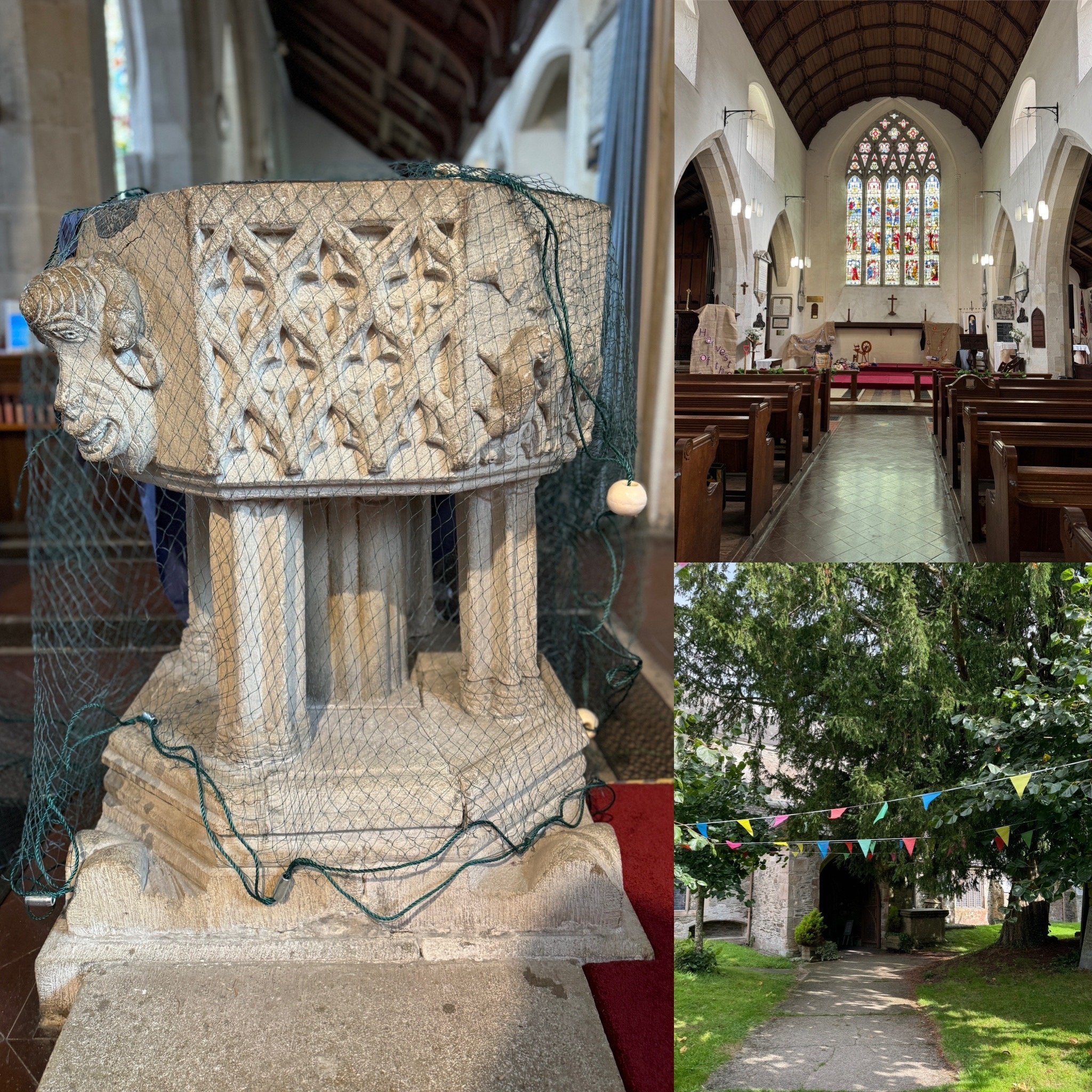
Sometimes energies take us by surprise. Heading to Cornwall this weekend, we were ‘called’ to stop off at Lostwithiel en route: to visit the location where the St Michael and St Mary energy lines intersect. The St Michael Alignment (as the ley lines are also known) is said to stretch across southern England from the far west of Cornwall to the east coast of Norfolk, and on through Europe to the Holy Land. The St Michael ley – the masculine ‘path of the sun’ or ‘dragon line’ – runs through many sacred sites in the UK (such as St Michaels Mount in Cornwall, Glastonbury Tor and Burrow Mump in Somerset – both with churches dedicated to St Michael on their summit) while the St Mary line – the feminine earth line – is believed to meander round rivers and hills. In certain places – such as Lostwithiel – the two intersect.
Lostwithiel is really charming. It definitely has ‘an energy’ – supported by a cluster of cute shops, ancient buildings and a visible sense of community. The flowing River Fowey adds to the vibrancy – and was once integral to this ancient port and administrative capital of Cornwall (the Duchy of Cornwall stills holds offices here). But it was the Church of Saint Bartholomew we were headed to. To visit the font where the two energy currents supposedly cross.
I first felt the energies when visiting the public toilets opposite the church. Standing outside the toilets, facing the church, my body toppled backwards. A sense of a current pushing me. Entering the grounds of the church (from the Fore Street entrance), about half way up the path, I felt the familiar whoosh of energy in my chest which indicates I have crossed an energy line or boundary. And upon entering the church itself, I was immediately pulled to the left where the font is situated. Full body shivers and vibrations – especially when standing on the stone plinth at the base of the font – indicated this as a special place.
We were lucky that the church, whilst very much in use and part of the community, was vacant during our visit. We stood at different angles to the font, allowed our bodies to show us the direction of the flows of energy, and soaked up the higher vibrations – which I could feel filling every cell of my body. The church itself has a lovely feel – though there is no mention of the energy lines reported to run through it. (The surveillance camera and card donation machine by the font would indicate a number of visits – and I was grateful to be able to donate). But more important than the acknowledgement was the fact the font was in use - and so, the energy was ‘live’ and not dormant. Though not religious myself, a feeling of love and continuation settled my senses.
Supposedly the St Michael Alignment runs through sacred places of worship in order to connect divinity to humanity. That’s a rather lovely thought, isn’t it?
If you are heading to Cornwall, I recommend a visit to the font at the Church of St Bartholomew and connection to the divinity running through it. The power may surprise you :)
Love,
Delilah
Visited: 04.10.24
The BRITISH LIBRARY, London
The BRITISH LIBRARY, London. Upon publishing a book, by law one copy of every UK publication (including e-books) must be sent to the British Library within one month of publication. To preserve knowledge and information for future generations and 'maintain the national published archive of the British Isles'. The legal deposit has existed for nearly 400 years and collects publicly available work including, and not limited to: books; pamphlets, posters, leaflets and flyers; maps; sheet music and scores; journals, magazines and newspapers ...

Upon publishing a book, by law one copy of every UK publication (including e-books) must be sent to the British Library within one month of publication. To preserve knowledge and information for future generations and 'maintain the national published archive of the British Isles'. The legal deposit has existed for nearly 400 years and collects publicly available work including, and not limited to: books; pamphlets, posters, leaflets and flyers; maps; sheet music and scores; journals, magazines and newspapers. And, since 2013, ‘Each year, the British Library UK Web Archive collects a ‘snapshot’ of all the UK websites that we can identify. This includes at least four million websites, with several billion files.’ That’s a lot of energy and collected intentions. Over 170 million items. All available, as resource, at the British Library - 96 Euston Road, London NW1 2DB.
As an author of two books - and not having set foot in our nation’s library before - I was keen to visit the institution I had excitedly and dutifully posted a copy of each my books to.
As I walked through the entrance doors, I immediately knew I had to do an energy report. An immediate expansion of heart energy settled me. If I were to choose a ‘chakra’ to describe the British Library, it would be the heart chakra … a powerful sense of the heartfelt love and dedication which has gone into the books and contents this building represents. It felt solid, grounded - surprisingly spacious, yet ‘bottom heavy’. A ‘sinking fund’ came to mind - of knowledge, but not without the challenges this brings. I later learned of the vast underground basements (4 in total - the deepest in the UK) housing and preserving the works and treasures - alongside items stored at the British Library site at Boston Spa in Yorkshire - and this made sense: the perception of a continually descending pit of energy maintained in the walls and fabric of what you see.
Formerly part of the British Museum, the British Library was created in 1973 and moved into the St Pancras building in 1997. Ten million red bricks were used in the construction of the building, though inside, there is a feeling of minimal lightness and vast ceilings, which somehow feels as grounded on the top floor as the ground floor. It doesn’t have an aged patina - more so an ‘invested’ one. Central within the building, in a floor to ceiling glass display, is the King's Library with 65,000 printed volumes along with other pamphlets, manuscripts and maps collected by King George III between 1763 and 1820 … a gilded column of history surrounded by people working on laptops. A colourful silence in the hubbub of no noise. Preferable to a Starbucks, for those in the know about the 150 open working spaces in the public areas.
It was the reading rooms I wanted to visit though, which require a free Reader Pass (bring appropriate ID if you are planning to visit). There are 11 reading rooms in total, including the smallest, the Maps Reading Room (the world’s largest map collection) and the popular ‘Humanities 1’. But before I could head up to the rooms, I had to drop my bag off in the locker room - an experience which only adds to the sense of anticipation. Pen replaced by pencil I was now ready.
Upon entering the rooms, I was struck by the energy. Each one is subtly different; the ‘Asian and African Studies’ has more energetic vibrancy and colour, the ‘Newsroom’ feels more chaotic, for instance. Yet all are uniform, within the same spacial abundance. An ecclesiastical feel, almost. Amongst the quiet hum of the A/C and the rumble of underground trains, there is an awareness of the surrounding city: the wood of the furnishings acting as buffer and connection to the outside world. I was struck by the noticeable quality of workmanship and materials - light wood desks and bookcases, extremely comfortable chairs, beautiful door handles, individual lighting and sockets at each of the 1277 reading room desks. There is an elegance and equality to the provision of reading opportunity - each person has their own ‘station’, of equal worth, to dip into the annals of time where minds can meet across invisible borders into works written and recorded by those who went before, or remain alongside, us. A vast crypt to drink from, to create new contributions from, where in this environment no one book is more valuable than another. There is a sense of presence - of a vacuum and timelessness - and immediacy as heads lower over the pages into the portal of knowledge. With barely any books on display, I sense the connection between person and resource as primary. Noticing my train of thought, my guide channels a message to me: ‘to gather oneself here is to present at the font of time, for knowledge is timeless but the acquiring of it can only happen with the sacredness of text - with experience, presence and engagement of life.’ Tuning in further, I sense more of an ‘akashic records’ energy than a spirit-of-place one. A central well, rather than a guarded space. Which is perhaps reflected in the ransom cyber-attack the British Library suffered in October 2023 (until January 2024 when the main catalogue returned online) - and which it is still recovering from (at a cost of 40% of its financial reserves / £6-7m according to Wikipedia).
The building feels protected and exposed all at the same time. By the nature of accumulated and accumulating knowledge it has to stay ‘open’ while also transcending time. ‘For eternity’ is a tricky stance to handle and with this thought my heart suddenly tightens as I pick up a real sense of fear and constriction in the common areas of the building, as I walk through the marble … a fear of ‘losing the knowledge’ … and I feel a wave of compassion for the custodians of this vast and enormous treasure. It feels like it - and all the people within its operation - need to breathe a little. I saw a tiredness in some of the staff, juxtaposed by people using the space to work from. An institution trying to move with the times, but anchored in the past as it holds the vibration of all (UK) books ever written.
As I left the building, the energy outside felt much freer and lighter. Tuning in to the land beyond the building itself, I could feel the imprint of the once ‘green lands’ underneath … pastureland and the presence of cattle or animals of some sort. Closer to date, I could feel something around ‘petrol’ - that the land had been used for storage of petrol-related items (which seemed ironic, as an imprint for a library). Upon checking, I note record of the site being used as a goods yard, but the imprint of flammable equipment remains strong.
The British Library is a sanctuary. For us, and also for our sacred text, knowledge and culture. It is also, to some extent, ‘forgotten’ yet increasingly needed in this modern world of screens. There, but not there. As a building, it is physically protected, but it is not as energetically boundaried as it could be. And I can understand why. Because ‘the words’ create the energy and intention (of the institution), and not, as with most organisations, the energy creating the words (or product/service). There is an intention to preserve, and so, the energy of ‘the preservation’ echoes within the building - as well as the energy of the words it holds. And so, a gap emerges between the two … comprised of the people who visit. Hence my sense of a ‘portal of knowledge’. The required energetic boundary is of the portal, the place and its contents … and also the unseen knowledge.
It is the kind of church I wish to visit - and certainly worth a visit if you haven’t been. And send it a little loving protection if so inclined. I think it will appreciate it :)
Love,
Delilah
Visited: 20.09.24
The Firebreak, Cerro Verde, Andalucía
The Firebreak, Cerro Verde, Andalucía. I hadn’t planned to do an energy report while in Spain, but the firebreak fascinated me. It was ‘a moment’ - in a ‘gap’ - on top of the world, And how could the destruction of trees feel so magical?

I hadn’t planned to do an energy report while in Spain, but the firebreak fascinated me. It was ‘a moment’ - in a ‘gap’ - on top of the world. And how could the destruction of trees feel so magical?
I was in Spain courtesy of my friend Jane Wake who had invited me to teach at her annual retreat at Finca el Cerrillo: a beautiful traditional farmhouse, nestled in the Andalucía Hills. Morning hikes began at dawn, before the heat gathered, and today we were doing ‘the big climb’: the 1200+ metre Cerro Verde in the Sierras de Tejeda, Almijara and Alhama mountains.
I’m a slow walker, which I like. It allows me to take things in, and to observe the energies (or maybe that’s my ego talking as I am overtaken by everyone in the group :)). The scenery was gorgeous, hillsides fizzing in the rising heat as the sun rose to blanket them. Feet climbing, upon a different land; bodies moving like ants up a mountain. And about two thirds of the way up: an expanse…the surprise of a firebreak. A chance to breathe. Like nature, itself.
With nearly 600 wildfires in the Andalusian region in 2023, burning some 1,700 hectares of land, you can see why the need to remove such a vast strip of vegetation and trees. I thought I would pick up energies of devastation, but instead I felt a surge of a different kind. Stripping the land bare creates a gap. A ‘weak spot’ energetically which allows the fire to drop. But this is just one aspect: the intention of the firebreak was super-strong and it is the combination of these energetics which creates the magic. That is how magic works: an intention entering a ‘gap’. And this really did feel quite magical.
The heat from the white ground was radiating and powerful. Tuning in to the intention of it - of the effect and affect of the workers who had created it and of all the locals from the surrounding white villages, for whom this firebreak brings safety and security, a near constant awareness in the background of their minds projected towards it - the benefits feel ongoing. As our path took us up part of it, a real sense of gratitude could be felt - which was beautiful. And where, further down the mountain the vegetation was suffering from drought, here, it was flourishing. I had a sense of the vegetation and nature being grateful for the firebreak…that it understood that part of itself had to be removed, to safeguard it; and a feeling of symbiotic and flourishing co-existence between people and the natural world.
In a world increasingly affected by wild fires, I now have a new perspective: that despite - and because of - the destruction, connection and a deeper understanding and engagement with the natural world can happen. It doesn’t have to look pretty to be powerful and real and alive. We can enable the magic; and usually, it starts with gratitude. From both sides.
A firebreak is a beautiful thing.
Love,
Delilah
Visited: 07.07.24
BURROW MUMP, Somerset
BURROW MUMP, Somerset. “Let’s head back via Burrow Mump,” he said. “It’s quite special.”
And he was right.
What a glorious mound (mound seems more appropriate than ‘hill’) of earth and energies! Maintained by the National Trust (and a herd of friendly sheep), it has an outwardly gentle and surprisingly magnetic feel…

“Let’s head back via Burrow Mump,” he said. “It’s quite special.”
And he was right.
What a glorious mound (mound seems more appropriate than ‘hill’) of earth and energies! Maintained by the National Trust (and a herd of friendly sheep), it has an outwardly gentle and surprisingly magnetic feel. Wonderfully healthy trees and their low-lying canopies entice us up the short climb to the peak where I instantly felt the aura and ‘forcefield’. The ruins of the 18th-century church of St Michael (built on the site of a medieval church) are interesting and ‘friendly’ - though not where my focus is drawn. “There’s something at the centre of this mound,” I say. Confirmed by guidance from my channel, it was the land beneath which was, for me, of main interest:
‘What we would say, my dear, is a building like this is not in alignment with the reason for the mound. It is the mound which holds the power. The mound has esoteric properties and, as you can see, enables vision beyond worlds. The building is an homage to the passing times.’
Circling the ruins and feeling into the energy pulls, I get out my compass. As suspected, the building is perfectly aligned North to South, East to West and energetically ‘gridded’ in its four corners. But it’s the centre point - the ‘cross point’ of the entrances within the nave that I’m drawn to, where not only does the ground significantly dip, but the energies converge - or emerge. Standing upon it, I have a feeling similar to a lift shaft beneath me, descending to the centre of ‘somewhere’…a gate, maybe…and a sense of the underworlds. A sense, too, of significance of the sun, moon, stars and constellations - of a decommissioned portal to other realms, or, as my companion said: an axis mundi (according to Merriam-Webster: world axis : line or stem through the earth's center connecting its surface to the underworld and the heavens and around which the universe revolves).
Supposedly, the St Michael energy line runs through Barrow Mump, and the 360 degree far-reaching views include Glastonbury Tor in the distance, though this feels of less significance to me. I sensed an energetic ‘dome’ over the mound; that it had been ‘created by men and maintained by women’ - a passing on (not ‘down’) of custodian and was a place of ‘visioning’ and information gathering. Druid or Pagan, or older even, perhaps. And a feeling of energies not dissimilar to those experienced at crop circles. I connected with the spirit of place, but was encouraged by my guidance to focus on the place of the spirit, rather than the spirit of place. Which made sense. The energies of this mound and axis hold a lot of people and land: a forcefield surrounding and emanating from it…capable of holding even more, I sensed. And, as a result, a feeling of welcome and lightness - symbolised by the fast fluttering of butterflies which kept landing and settling upon us at the ‘cross point’. Butterflies signify transformation and spiritual growth. Burrow Mump certainly feels like a gateway to this and more.
If you are ‘heading that way’, I recommend a visit :)
Love,
Delilah
Visited: 14.07.24